
Fake Milwaukee Tools on Temu: The Scam Ads, the Knockoffs, and Vevor
By The Tool Bandit
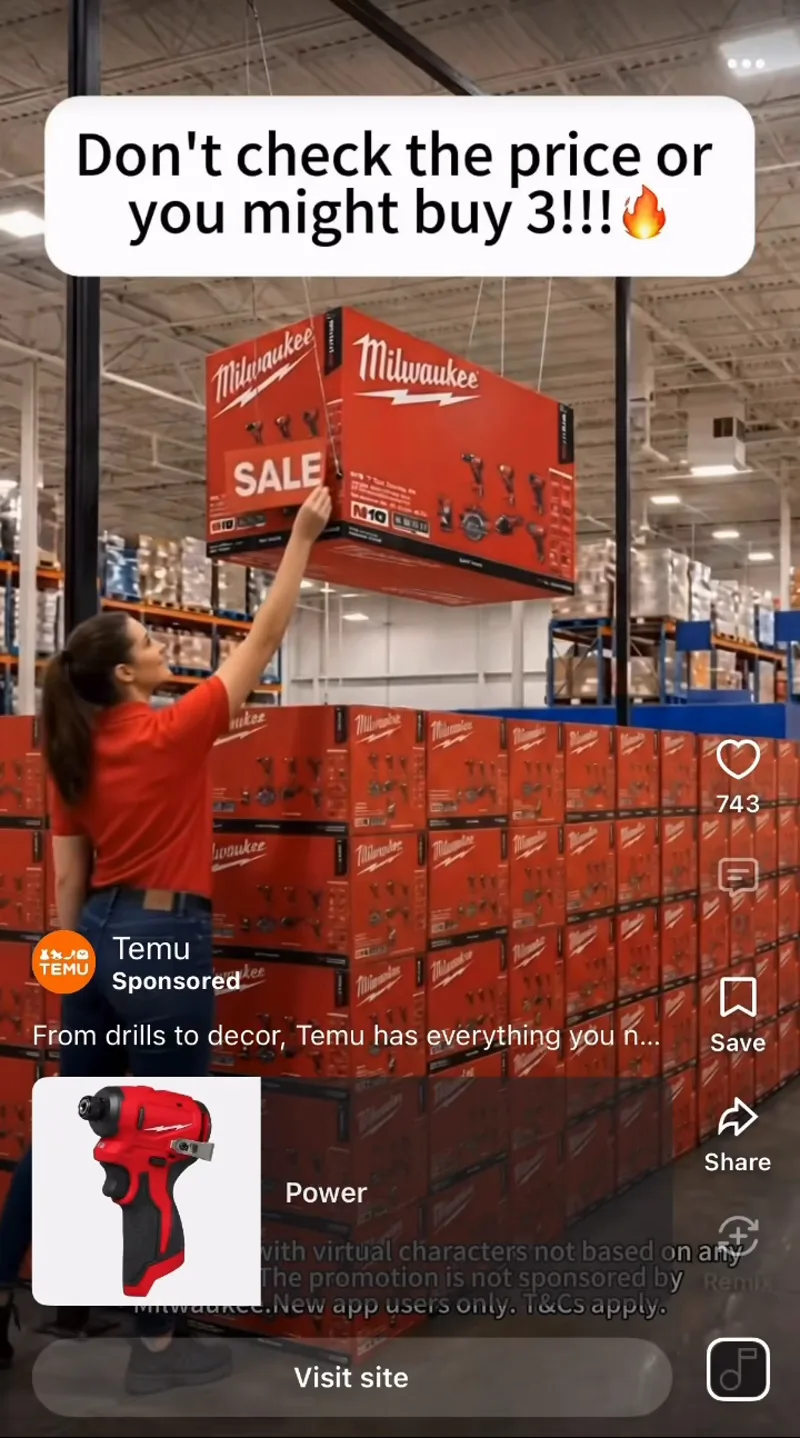
You’ve seen the ads: a Milwaukee M18 FUEL combo kit (the kind that sells for hundreds of dollars) offered at 90% off, sometimes with Temu’s name attached. They show up on Facebook, Instagram, and TikTok, and they look convincing. They are not real. This is how the scam works, how to spot a fake, and where a brand like Vevor actually fits in.
The 30-second version
In a hurry? This is the whole article:
- The “90% off Milwaukee” ads are scams. Social media ads funnel buyers to fake clearance websites. You get nothing, a knockoff, or the wrong item. And the scammers keep your payment info.
- Temu’s name gets borrowed, not used. Scam sites invoke Temu to look legitimate. The ads aren’t coming from Temu itself.
- Counterfeit batteries are the real danger. A fake tool wastes your money; a fake lithium battery is a fire hazard.
- Vevor is a different thing entirely. A real, cheap, direct-to-consumer brand. Not counterfeit, but a quality lottery with typically a one-year warranty and no spare parts.
- Buy Milwaukee from authorized retailers. That’s the only way the warranty applies.
How the scam works
The pattern has been running for years and barely changes, because it keeps working:
1. The ad. A video or image ad on Facebook, Instagram, or TikTok shows premium Milwaukee gear (M18 FUEL kits, PACKOUT boxes) at absurd prices. A combo kit that retails for several hundred dollars is listed at $39. Slogans like “final clearance sale” and “all tools must go” manufacture urgency.
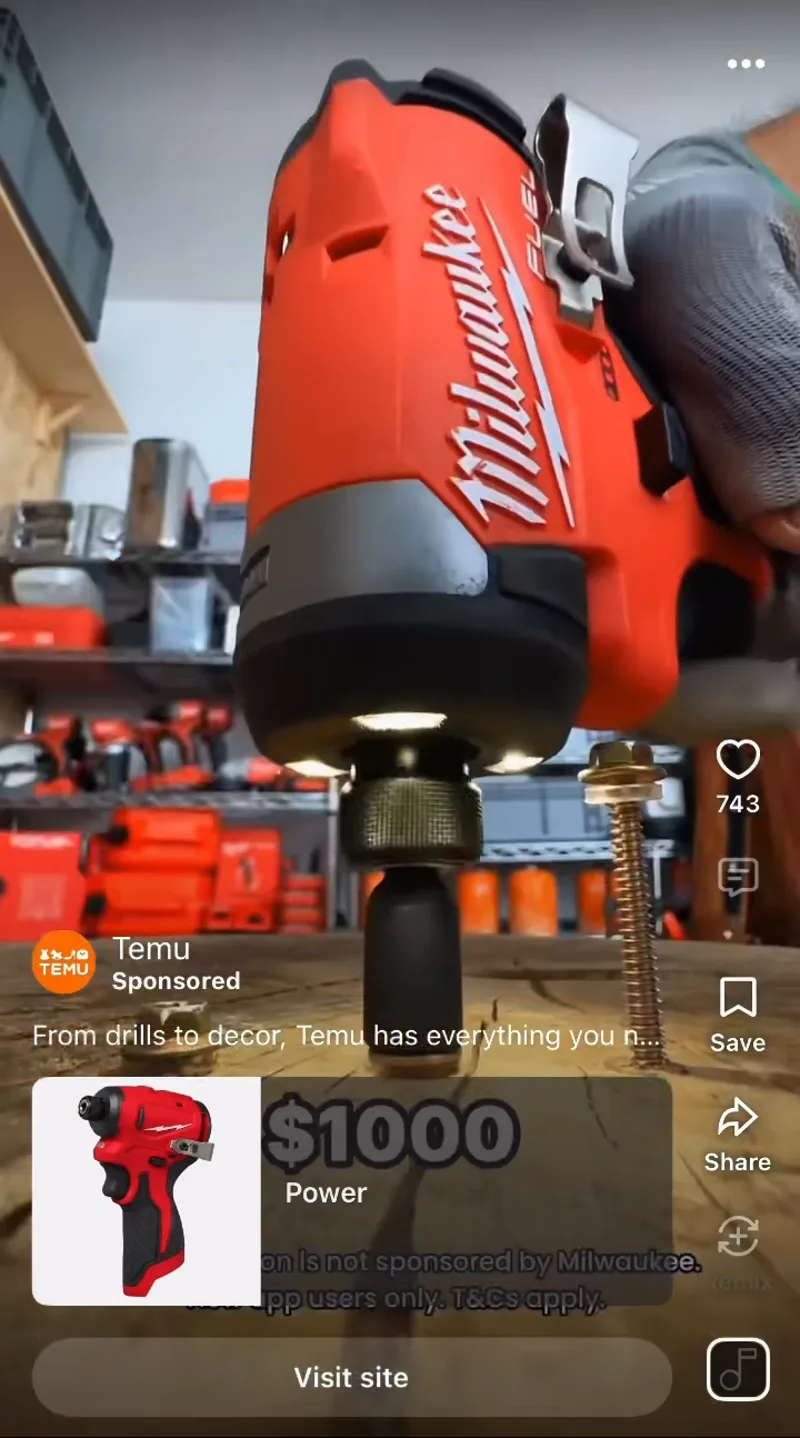
2. The site. The ad links to a website dressed up to look like a legitimate clearance store, sometimes copying real branding and product photos. The domains are typically newly registered, the owners anonymous, and the “about” and policy pages are filler.
3. The checkout. You pay. Then one of three things happens: nothing ever ships; a cheap knockoff arrives; or you receive something completely different from what you ordered. Either way, the scammers now have your name, address, and payment details.
4. The silence. There is no customer service to contact. Complaints go unanswered, and some victims report being blocked when they try to follow up.
Security researchers have traced networks of these fake clearance sites operating at scale. The same playbook gets reused across brands (DEWALT and Makita get the same treatment) and across fake storefronts.
Where “Temu” fits in
Temu is a real discount marketplace. But many of these scam operations invoke Temu’s name rather than operating through it. “90% off TEMU clearance sale” sites have been documented as standalone scams with no connection to the actual company. The Temu branding is borrowed credibility, the same way other scam sites borrow Harbor Freight’s or Home Depot’s.
The takeaway is simple: an ad that says “Temu” on it didn’t necessarily come from Temu. Judge the seller, not the logo in the ad.
Red flags checklist
Run through this list before buying tools from any unfamiliar site:
- Impossible prices. $39 for a premium combo kit, or “90% off” across a whole site. Real Milwaukee promotions exist, but nothing close to this.
- Pressure language. “Final clearance,” “all tools must go,” countdown timers, claims of selling at 97% off.
- No real contact info. No phone number, no physical address, no functioning customer service.
- A brand-new, anonymous domain. Recently registered, hidden ownership details.
- Stolen content. Product photos and legal pages lifted from real retailers.
- Sloppy text. Grammar errors and typos on a “professional” storefront.
- No real social presence. A legitimate retailer has a traceable history; scam sites don’t.
One or two of these might just mean a sketchy seller. Several together means walk away.
Counterfeit vs knockoff: different problems
A counterfeit illegally wears Milwaukee’s logo and branding. A knockoff says “compatible with” a Milwaukee part number and is a third-party product that may be legal but is not built or tested to Milwaukee’s standards. Both can disappoint, but only the first is a lie about what it is. That distinction matters most on batteries, where a compatible pack is openly a different product, not a fake, but still carries the quality risk of skipping Milwaukee’s safety testing.
How to spot a fake Milwaukee tool
Counterfeits don’t only come from scam sites. They also surface through marketplace sellers. Here’s what to check:
- Serial numbers. Every genuine Milwaukee tool has one, and Milwaukee can verify it for you. If a seller can’t or won’t provide it, that’s an answer.
- Packaging quality. Real Milwaukee packaging has crisp printing, correct spelling, and the right shade of Milwaukee red. Fakes tend to show fuzzy printing, misaligned logos, flimsy materials, or typos.
- The logo itself. Counterfeits often get the details slightly wrong: off colors, inconsistent fonts, imprecise placement.
- Seller reviews. Multiple complaints about authenticity or quality from other buyers are a clear signal.
- The price. If it’s far below every other seller, it’s either a scam, stolen, or fake. There is no fourth option at 90% off.
Milwaukee also provides a channel for reporting fraudulent websites selling counterfeits. If you find one, reporting it helps the next person.
Fake Milwaukee batteries: the most dangerous counterfeit
A counterfeit drill wastes your money. A counterfeit lithium-ion battery can burn your garage down. Batteries are the highest-risk fake in the tool world, and there have been recurring reports of counterfeit Milwaukee batteries sold through marketplace sellers.
The tell on batteries is often in the wording: listings that say “compatible with” a Milwaukee part number (like 48-11-1850) are advertising third-party batteries, not genuine Milwaukee packs. That doesn’t automatically make them dangerous. But it does mean they weren’t built or tested to Milwaukee’s standards, and a cheap pack with no safety testing is a gamble you don’t want in your house. A counterfeit battery can also damage the genuine tools you plug it into.
If you are holding a suspicious pack, check it physically. Look at the screws: genuine M18 packs use security Torx screws, with a pin in the center of the socket. Phillips screws, or plain Torx with no pin, have been documented on fakes. Weigh the pack against a genuine one: counterfeits run noticeably lighter on cheap cells. Check the label print quality, and check the serial number with Milwaukee. Counterfeit tools may also bear fake UL or CSA marks, so a safety mark on the box is not proof the tool went through real safety testing.
Rule of thumb: buy batteries from the same authorized retailers you’d buy the tools from. Saving $30 on a battery isn’t worth the downside.
What to do if you already ordered
If you already paid a scam site, act fast:
- Dispute the charge with your credit card company immediately. Credit cards have far stronger fraud protections and chargeback rights than debit cards or other payment methods.
- Watch your statements for additional unauthorized charges in the following weeks.
- Change any passwords you entered on the scam site, especially if you reuse them elsewhere.
- Report the site: to Milwaukee’s fraud reporting channel and to the authorities. It may not get your money back, but it helps shut the operation down.
Report the ad, not just the charge: report the ad on the platform where it appeared, report the site to Milwaukee’s fraud channel, and report it to the FTC.
Vevor: the gray zone
Vevor comes up in every conversation about cheap tools, so let’s place it correctly: Vevor is not counterfeit. It’s a real direct-to-consumer company, founded in Shanghai in 2007, selling Vevor-branded tools and equipment at very low prices by manufacturing in bulk in China and skipping the retail middleman.
What you get for the low price is a quality lottery. User reviews are genuinely mixed: plenty of buyers say the tools get the job done and even outperform their price tags, while others report duds. One widely cited pattern is a tool breaking early with little recourse. Aggregated reviews sit around 4.4 out of 5, with most buyers happy and a meaningful minority (over one in ten) rating their purchase one star.
The structural trade-offs, beyond any single product:
- Typically a one-year warranty: a fraction of the 3–5 years the premium brands offer, with support handled online.
- No spare parts. Vevor generally doesn’t sell individual replacement components. If something fails outside the return window, expect a partial refund or a whole replacement unit, not a repair.
- Weak battery ecosystem. Vevor’s cordless platform is small and proprietary. Nothing like the 100+ tool lineups of Milwaukee or DEWALT. Vevor’s strengths are corded tools, shop machinery, and automotive specialty equipment: the kind of stuff you plug in and leave alone.
Put plainly: Vevor is a legitimate budget brand for occasional-use tools, where you accept the gamble with open eyes. A fake “Milwaukee” from a scam ad is something else entirely. It’s a lie wearing someone else’s logo. Don’t confuse the two. For where Vevor sits among the other brands, see Tool Brands Explained.
Where to actually buy Milwaukee tools
Milwaukee sells through authorized retailers (Home Depot, Ace Hardware, Acme Tools, White Cap, Summit Racing, NAPA Auto Parts, Blain’s Farm & Fleet, and similar), not through miracle clearance sites. This matters for more than authenticity: Milwaukee does not honor warranty claims on tools bought outside its authorized network. Buy from an authorized seller and you keep up to five years of limited warranty on power tools and lifetime coverage on most hand tools. Buy from a random site and you get neither the warranty nor any certainty the tool is genuine. When buying on Amazon, check the 'Sold by' line and confirm the seller is authorized before you rely on the warranty.
Keep your receipt. Even without product registration, Milwaukee can check warranty eligibility from the tool’s date codes. But a receipt makes the process smoother.
Want to understand Milwaukee’s actual tool lines before you shop? Start with Milwaukee Tool Lines Explained. Then check the Milwaukee deals page for legitimate sales.
FAQ
Are Milwaukee tools on Temu real?
The 90%-off Milwaukee tool ads that invoke Temu’s name are scams. They run on Facebook, Instagram, and TikTok and funnel buyers to fake clearance websites. Victims typically receive nothing, a cheap knockoff, or the wrong item entirely. And the scammers keep the payment and personal data. Temu is a real marketplace, but these ads are not Temu.
Why are Milwaukee tools so cheap in Facebook ads?
They aren’t actually cheap. The ads are bait. Scam sites advertise Milwaukee combo kits for prices like $39 to collect payments and personal information. Real Milwaukee tools never sell for 90% off; the deepest legitimate discounts are a fraction of that, from authorized retailers.
How can I tell if a Milwaukee tool is fake?
Check the serial number. Milwaukee can verify it. Real Milwaukee packaging has crisp printing, correct spelling, and the right shade of Milwaukee red; fakes often have fuzzy printing, misaligned logos, or typos. On batteries, wording like “compatible with 48-11-1850” means it’s third-party, not genuine Milwaukee. And if the price was impossibly low, that’s the biggest tell of all.
Is Vevor a legit brand?
Yes. Vevor is a real direct-to-consumer tool company founded in Shanghai in 2007. It sells Vevor-branded tools at very low prices. It is not counterfeit. Quality is a lottery: many buyers find the tools get the job done for occasional use, but they are not pro-grade, the warranty is typically one year, and replacement parts are generally not sold. It is a different gamble than a fake Milwaukee, which is a lie wearing someone else’s logo.
Does Milwaukee’s warranty cover tools bought on Amazon or marketplaces?
No. Milwaukee does not honor warranty claims on tools bought outside its authorized retailer network. Buying from authorized sellers (Home Depot, Ace Hardware, Acme Tools, and similar) keeps the warranty intact: up to five years limited on power tools and lifetime on most hand tools. When buying on Amazon, check the 'Sold by' line and confirm the seller is authorized before you rely on the warranty.
What should I do if I already ordered from a scam site?
Contact your credit card company immediately to dispute the charge. Credit cards have far stronger fraud protections than debit or other payment methods. Monitor your statements for further charges, change any passwords you entered on the scam site, and report the site to Milwaukee and the authorities.
Are Milwaukee tools on Amazon real?
Some are, and some are not. Milwaukee sells through authorized retailers, and Amazon listings come from a mix of sellers. Check the Sold by line on the listing, confirm the seller is authorized before you rely on the warranty, and be wary of any price far below every other seller. Milwaukee does not honor warranty claims on tools bought outside its authorized network, so the seller matters as much as the tool.
Is my "compatible with Milwaukee" battery a fake?
Not necessarily. A battery advertised as "compatible with" a Milwaukee part number is a third-party battery, not a genuine Milwaukee pack, but that alone does not make it counterfeit. A counterfeit wears Milwaukee's logo and pretends to be genuine. A compatible battery is openly a different product. The risk is quality, not identity: a cheap pack may skip the safety testing and overload protection genuine packs go through, so buy batteries from the same authorized retailers you would buy tools from.
Are fake DEWALT tools a thing too?
Yes. The same fake clearance playbook targets DEWALT, Makita, and Bosch as well as Milwaukee. The same red flags apply: impossible prices, pressure language, no real contact info, a brand-new anonymous domain, and stolen product photos. The scam is not brand specific, so judge the seller, not the logo in the ad.
Sources
- VEVOR Houston flagship announcement: confirms VEVOR was founded in 2007.
Deals live right now
Discounts verified November 11, 2026. The retailer price is the final authority.
Also in this series: Milwaukee Tool Lines Explained.